

Ammunition Manufacturing Process from Raw Materials to Cartridges
The ammunition manufacturing process involves far more than loading powder into a case and seating a projectile. Producing finished cartridges consistently at commercial volumes requires a coordinated system of material preparation, metal forming, heat treatment, component manufacturing, loading, inspection, finishing, and packaging.
Every stage influences the next. Variations introduced while forming a cartridge case may create problems during priming or loading. Inconsistencies in projectile weight or geometry may affect seating and final cartridge inspection. Poor feeding, washing, or material handling can limit the output of otherwise capable equipment.
For manufacturers researching ammunition manufacturing equipment or planning a complete ammunition production line, understanding these relationships is essential. The goal is not simply to obtain machines for every operation. It is to build a production system in which case manufacturing, projectile production, load assembly and packaging, inspection, and secondary processes work together at compatible rates.
A systems-based approach helps manufacturers achieve consistent output, improve yield, reduce avoidable downtime, and create a production environment that can adapt to changing caliber and capacity requirements.
Planning an Ammunition Production Line Around the Finished Product
Before raw materials enter production, manufacturers must define what the line is expected to produce. Ammunition type, caliber range, production volume, quality requirements, packaging format, and available facility space all influence the equipment configuration.
A high-volume pistol cartridge production line may prioritize continuous automation and rapid output. A rifle ammunition line may require additional forming stages, more complex case geometry, tighter process control, or specialized projectile operations. A manufacturer serving several markets may need flexible tooling and faster caliber changes rather than one dedicated line.
Early production planning should address:
- Required calibers and cartridge specifications
- Expected parts per minute and operating efficiency
- Pistol, rifle, sporting, defense, or other production requirements
- Desired level of automation and operator involvement
- Inspection, packaging, and traceability expectations
- Available utilities, floor space, and expansion capacity
These decisions determine whether the operation needs individual ammunition manufacturing machines, modular production cells, dedicated component lines, or a complete turnkey ammunition factory.
Raw Material Preparation and Quality Control
Ammunition manufacturing begins with materials that must respond predictably to forming and assembly. Brass strip or wire may be used for cartridge cases, while projectile production may involve jacket material, lead wire, lead slugs, specialty cores, or other components based on the finished bullet design.
Material consistency affects nearly every downstream process. Variations in thickness, hardness, chemistry, surface condition, or lubrication can change how material behaves under pressure. If the incoming material does not meet the intended specification, manufacturers may experience splitting, uneven drawing, dimensional instability, premature tooling wear, or elevated scrap rates.
Incoming material inspection therefore provides an important first layer of process control. The objective is to identify problems before raw material enters value-added forming operations. Material storage and handling must also protect stock from contamination, damage, corrosion, and mixing between production lots.
Once material quality has been confirmed, it can move into the component manufacturing stages that create the cartridge case and projectile.
Cartridge Case Manufacturing
Cartridge case manufacturing is one of the most demanding parts of the ammunition production process. A case must hold the primer, propellant, and projectile while maintaining the dimensions and material properties required for reliable loading and use.
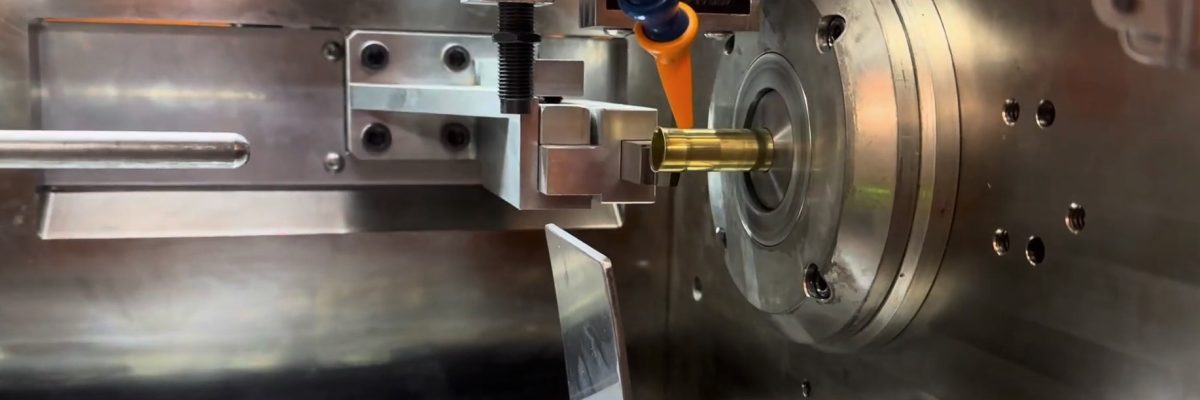
Brass case production commonly begins with blanking and cupping. A press forms the starting material into a shallow cup, establishing the foundation for later drawing operations. The cup then moves through a series of draws that progressively increase its length and refine its wall profile.
Each drawing stage must control material flow, lubrication, press force, tooling alignment, and dimensional change. Trying to achieve too much deformation in one operation can damage the material or create an unstable process. Multiple controlled stages allow the case to develop its required geometry while preserving wall integrity.
As brass is formed, it work-hardens. Annealing restores the ductility required for additional drawing, necking, tapering, or final forming. The placement and control of annealing operations are therefore critical. Inconsistent heat treatment can cause material to respond differently from one component or production lot to another.
Additional case manufacturing operations may include:
- Head forming and primer pocket development
- Flash hole formation
- Case trimming and head turning
- Necking and tapering for bottleneck rifle cases
- Washing, pickling, annealing, and polishing
- Dimensional and surface inspection
The exact sequence depends on the cartridge design and production method. Regardless of caliber, the finished case must leave the line with controlled dimensions, appropriate material properties, and a surface condition suitable for loading.
Washing, Pickling, Polishing, and Case Finishing
Forming operations depend on lubricants and metalworking fluids, but those materials must be removed at appropriate stages. Annealing can also leave oxidation or discoloration that may require additional treatment.
Washing removes lubricants, fines, and process residues from cases, cups, and other components. Pickling can remove oxide layers and prepare brass for subsequent operations. Polishing or burnishing improves surface consistency, removes minor imperfections, and produces the required finished appearance.
These are not merely cosmetic operations. Residual fluids can affect handling, inspection, or assembly. Excessive oxidation can make surface evaluation more difficult. Inconsistent drying may lead to spotting or corrosion concerns.
Manufacturers must also account for the wastewater and process chemistry created by wet finishing systems. Washing compounds, metalworking fluids, dissolved metals, polishing residues, and suspended solids require an appropriate treatment strategy. Wastewater treatment should therefore be included during facility and production-line planning rather than added after the primary machines have been installed.

Projectile and Bullet Manufacturing
The projectile manufacturing process creates the component that will be seated into the finished cartridge case. Depending on the bullet design, production may involve jacket forming, core preparation, core swaging, assembly, point forming, finishing, and inspection.
For jacketed bullets, the process begins with forming the jacket material into a cup. The cup is drawn through controlled stages to produce the required length, diameter, and wall profile. Like case drawing, jacket forming depends on tooling alignment, lubrication, material condition, and carefully managed deformation.
Lead core machinery prepares the internal projectile mass. Lead wire or other feedstock may be cut into slugs and swaged to establish the required weight, density, and geometry. The core must then be seated consistently inside the jacket.
Bullet press equipment combines and forms the components into the intended projectile profile. Depending on the design, the production line may perform ogive forming, base forming, tip formation, trimming, bonding, or other specialized operations.
Projectile quality depends on several closely related characteristics, including:
- Consistent weight and internal mass distribution
- Jacket wall uniformity
- Core-to-jacket alignment
- Projectile concentricity
- Ogive, tip, and base geometry
- Surface condition and finished diameter
A projectile that varies in weight, balance, or geometry can create difficulties during seating and final inspection. This makes projectile manufacturing an integral part of the complete cartridge production process rather than an isolated upstream operation.
Component Feeding and Material Transfer
Once cases and projectiles have been manufactured, they must be delivered to the loading equipment in the correct orientation and at a stable rate. Primers, cases, bullets, trays, boxes, and finished cartridges may all require different feeding and conveying systems.
Material handling is a common source of hidden production losses. A machine may be capable of a high cycle rate, but the line cannot maintain that output if components arrive inconsistently. Poor transfers can create jams, surface damage, incorrect orientation, accumulation problems, or frequent operator intervention.
Feeding systems, conveyors, elevators, transfer mechanisms, and accumulation zones should be selected as part of the complete ammunition production line. They must accommodate the component geometry, desired throughput, caliber changeover strategy, and available floor layout.
Effective material flow keeps individual machines supplied without allowing one process to overwhelm the next.
Load, Assembly, and Packaging
The load, assembly, and packaging line, often called an LAP line, transforms cases, primers, propellant, and projectiles into completed cartridges.
The process begins by orienting and feeding cases into the line. Primers are then inserted and, where required, crimped or sealed. A controlled powder charge is dispensed into each case. The projectile is placed and seated to the specified depth, after which the cartridge may be crimped, sealed, marked, or sent through other specialized operations.
The loaded cartridge must maintain critical relationships between case dimensions, powder charge, primer condition, projectile position, and overall cartridge geometry. This requires precise equipment as well as consistent input components.
A complete LAP line may incorporate case priming, propellant charging, bullet seating, crimping, mouth and pocket sealing, cartridge inspection, tray loading, boxing, and bulk packaging. Manufacturers may choose a continuous high-production line or a modular configuration that allows individual machines to operate in cells.
The best configuration depends on the manufacturer’s required volume, product mix, available labor, changeover needs, and expansion plans.
Automated Ammunition Inspection
Inspection should occur throughout the ammunition manufacturing process, not only after a cartridge has been fully assembled. Detecting variation early prevents defective components from consuming additional machine time, materials, and labor.
Case inspection may evaluate dimensions, surface condition, neck geometry, primer pocket features, or flash hole formation. Projectile inspection may verify diameter, profile, surface quality, concentricity, or weight. Final cartridge inspection may evaluate overall dimensions, primer condition, seating, surface defects, and other critical characteristics.
Automated ammunition inspection equipment can combine dimensional measurement, machine vision, laser-based analysis, gauging, and weight verification. Inspection data also gives manufacturers a clearer view of process behavior. Trends in rejects may reveal tooling wear, setup variation, feeding problems, or gradual process drift before a larger failure occurs.
The most effective inspection strategy is connected to production control. Instead of serving only as a final rejection point, inspection becomes a source of feedback for improving the entire line.
Packaging the Finished Cartridges
After final inspection, approved cartridges move into the required packaging format. This may include trays, retail boxes, cartons, cases, or bulk containers.
Packaging equipment must maintain the output rate of the LAP line while confirming that the correct quantity and orientation reach each package. Automated tray packing, boxing, counting, labeling, and bulk packing reduce manual handling and provide a more consistent final presentation.
Packaging is the final production stage, but it should be considered early in line design. A fast loading operation can still create a bottleneck if the inspection and packaging equipment cannot handle the same production volume.
Build an Ammunition Manufacturing Process Around Your Production Goals
Understanding the ammunition manufacturing process is an important first step, but every production project presents different requirements. Caliber range, output goals, quality standards, factory layout, automation, available utilities, and existing equipment all affect the correct solution.
Ammo-Rx helps manufacturers evaluate these variables and develop coordinated production systems covering case manufacturing, projectile production, loading, assembly, inspection, packaging, finishing, feeding, conveying, and facility integration.
Whether the goal is to establish a complete turnkey ammunition factory, add a new cartridge production line, or improve an existing operation, the process should begin with a detailed review of production needs and current constraints.
Contact Ammo-Rx to discuss your ammunition manufacturing goals and identify the equipment, engineering, and integration required to move from raw materials to consistent, inspected, and packaged cartridges.