

Improving Yield in Brass Case Forming Through Better Cupping, Drawing, and Head Turning Equipment
Yield is one of the most revealing metrics in brass case production. It captures everything that matters: material efficiency, dimensional control, press synchronization, tooling stability, and process discipline. Even a small reduction in scrap rate can translate into substantial cost savings across high-volume cartridge manufacturing operations.
For engineers evaluating brass case manufacturing equipment, the key question is not simply how fast a line can run. It is how consistently it can maintain tolerance, concentricity, and metallurgical integrity from cup to finished head — without introducing reject conditions that quietly erode throughput.
Modern improvements in cupping press machine, brass drawing machine, and head turning machine design have fundamentally changed how manufacturers approach yield optimization. Understanding how equipment selection impacts scrap rate, dimensional stability, and output efficiency is essential for building a resilient cartridge case production system.
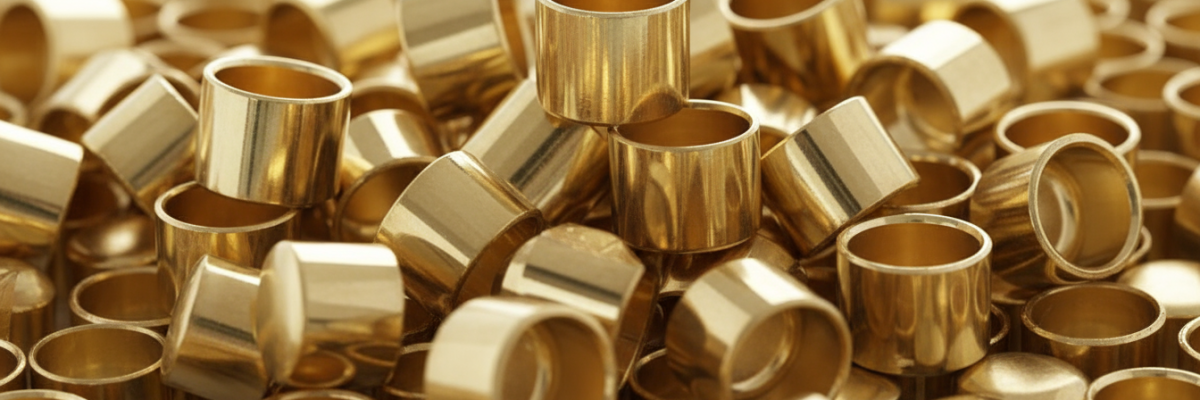
Where Yield Is Won or Lost: Brass Case Production
Brass case forming is a progressive deformation process. At each stage: cupping, drawing, annealing, trimming, head forming, and turning – the material is pushed closer to final geometry. Every mechanical interaction with the brass introduces potential for dimensional drift, surface damage, eccentricity, or work-hardening imbalance.
Yield loss typically originates in three core areas:
-
Inconsistent cup geometry at the start of the process
-
Misalignment or variable pressure during progressive drawing
-
Head and rim dimensional instability during final turning
Each of these points is directly influenced by equipment capability and system integration.
Cupping Press Performance
Once the cup is formed, the progressive drawing process begins. This is where most scrap occurs.
Each draw stage elongates the brass while reducing wall thickness. If force application, alignment, or lubrication is inconsistent, common defects emerge:
- Wall thinning beyond tolerance
- Longitudinal splits
- Surface scoring
- Shoulder distortion in bottleneck cases
Modern brass drawing machine design directly impacts yield through several mechanisms.
1. Ram Synchronization and Transfer Precision
In high-speed operations, transfer timing between stations must be exact. Poor indexing creates misfeeds or misalignment at the next die station, leading to dimensional drift or mechanical damage.
Servo-driven transfer systems offer improved synchronization compared to purely mechanical cam-driven systems. This reduces shock loading and ensures smoother material flow.
2. Tooling Alignment and Rigidity
Frame stiffness and die-set precision are critical. Deflection under load alters die clearance, which affects wall thickness consistency.
High-quality case forming equipment incorporates reinforced press frames, precision-ground guideways, and real-time load monitoring to detect anomalies during production.
3. Lubrication Control
Inconsistent lubrication increases friction, raising forming stress and accelerating tool wear. Automated lubrication delivery systems ensure even distribution and reduce localized thinning or galling.
Improved lubrication consistency directly lowers split rates and extends tooling life — two major contributors to yield performance.
Annealing Integration and Preventing Work-Hardening Failures
Between draw stages, brass must be annealed to restore ductility. Inconsistent annealing temperature or dwell time can create localized brittleness or uneven grain structure.
Advanced cartridge case production equipment integrates induction annealing with closed-loop temperature monitoring. By maintaining uniform metallurgical properties, downstream splits and neck cracks are significantly reduced.
From a yield standpoint, annealing precision often determines whether high-speed drawing remains sustainable at scale.
Head Formation and Turning
After final draw and trimming, the case head must be formed and finished to tight dimensional standards. Rim thickness, extractor groove geometry, and head flatness directly affect chamber fit and ignition reliability.
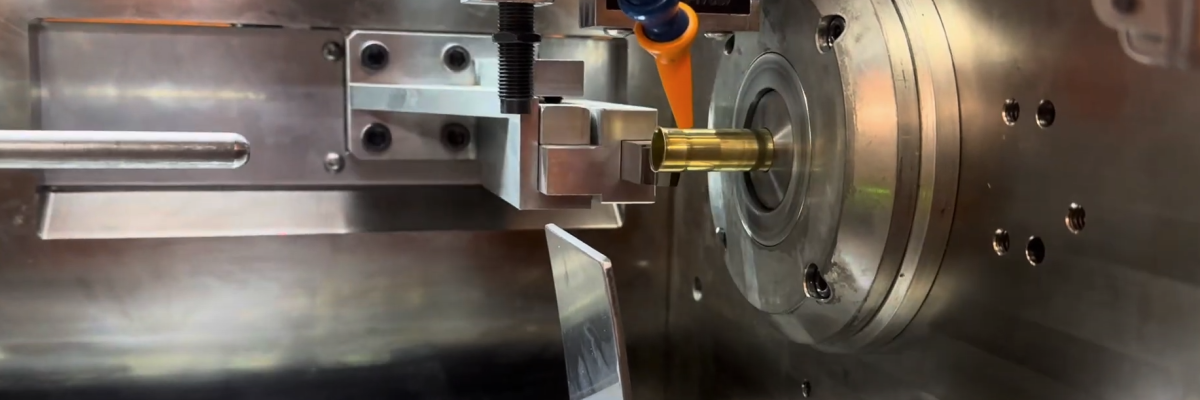
The head turning machine stage is frequently underestimated in its impact on scrap rate. Dimensional deviation in rim thickness or eccentricity often results in downstream rejection during inspection.
Modern head turning systems improve yield by incorporating:
-
High-precision spindle control
-
Balanced clamping mechanisms to minimize distortion
-
In-process dimensional measurement
-
Vibration damping for surface finish stability
Even minor improvements in concentricity control at this stage reduce rejection rates during final inspection and improve overall line efficiency.
Equipment Rigidity and System Integration
While individual machine specifications matter, yield is ultimately influenced by how well the entire brass case manufacturing equipment ecosystem operates together.
Key integration factors include:
-
Transfer alignment between cupping and drawing lines
-
Floor vibration control
-
Tooling standardization across presses
-
Centralized monitoring of forming loads
-
Predictive maintenance systems
When machines operate as isolated units without shared data visibility, process drift can go undetected until scrap rates rise significantly.
Integrated production architectures allow engineers to track forming loads, temperature trends, dimensional drift, and cycle consistency across the entire line. This data-driven visibility enables proactive correction rather than reactive scrap sorting.
Measuring Yield Improvement
Improving yield is not only about reducing visible rejects. It also affects:
-
Tool life and changeover frequency
-
Press downtime
-
Energy efficiency
-
Material utilization
-
Labor allocation
Upgrading to more advanced cupping press machine and brass drawing machine systems often produces compound benefits. Reduced vibration extends tooling life. Improved alignment lowers split rates. Better lubrication control reduces scoring and polishing requirements.
The cumulative effect is not just fewer rejected cases, but smoother throughput and lower per-unit production cost.
When to Upgrade Equipment vs. Optimize Process
Engineers frequently attempt to solve scrap problems through process adjustments alone. While tooling refinements and lubrication improvements can yield gains, persistent yield loss often indicates structural limitations in legacy equipment.
Common upgrade indicators include:
-
Recurring wall thickness variability
-
High neck split rates after annealing
-
Persistent rim eccentricity
-
Excessive tool wear
-
Inability to maintain tolerance at higher speeds
In these cases, more modern case forming equipment may deliver immediate yield improvements simply through enhanced rigidity, servo control, and real-time monitoring capability.
The Strategic Role of System Engineering
Yield improvement is not achieved by purchasing faster machines. It requires system-level evaluation of forming forces, transfer mechanics, tooling geometry, and metallurgical behavior.
Experienced integrators such as Ammo Rx approach brass case production as an engineered system rather than a collection of independent presses. By aligning brass case manufacturing equipment, annealing integration, drawing stations, and head turning processes into a harmonized architecture, manufacturers can significantly reduce scrap rates while increasing consistent output.
Even incremental improvements in concentricity control or wall thickness stability compound dramatically across millions of units.
Yield Optimization in Cartridge Case Production
Advancements in servo motion control, predictive analytics, and integrated inspection systems continue to improve brass case yield performance. AI-assisted defect detection and load-trend monitoring are increasingly allowing engineers to identify micro-variations before they produce visible scrap.
For manufacturers evaluating cartridge case production equipment, the path to higher yield lies in precision, rigidity, monitoring, and integration.
Better cupping control improves downstream drawing stability. More precise brass drawing machine architecture reduces wall variation and splits. Advanced head turning machine systems ensure final dimensional accuracy and minimize inspection rejects.
When engineered as a unified production ecosystem, modern brass case manufacturing equipment does more than increase speed, it protects material investment, stabilizes tolerance control, and maximizes output efficiency.
In high-volume cartridge production, yield is not a side metric. It is the defining measure of equipment performance.